


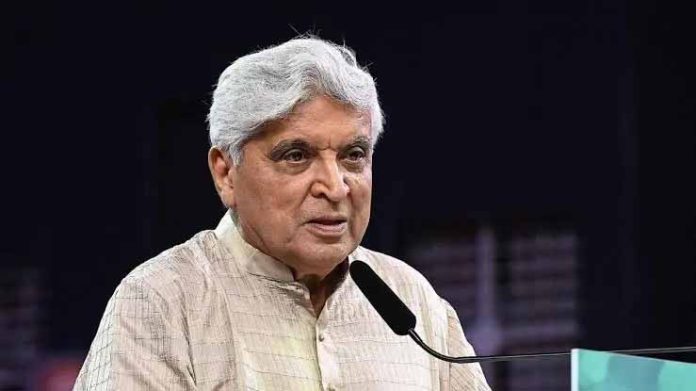

Veteran screenwriter and lyricist Javed Akhtar has boldly criticized the double standards of film censorship in India. Speaking at the inaugural session of the Anantrang Mental Health Cultural Festival on Friday, he condemned the leniency shown towards vulgar films while meaningful cinema struggles for acceptance.
“In this country, vulgarity will still be passed by the film boards. They don’t realize that these are wrong values — a male chauvinistic view that humiliates women. But what will not be passed is something that shows the mirror to society,” Akhtar stated emphatically.
He highlighted that the audience holds a significant influence over the success and failure of films. “A bad audience makes a bad film successful,” he remarked, asserting that societal choices heavily shape cinematic narratives.
Akhtar further elaborated that films merely reflect societal realities. “A film is a window into society through which you peek. Closing the window will not fix what is happening outside,” he pointed out. This perspective aligns with his commitment to portraying authentic stories that resonate with real-life issues.
On the subject of hyper-masculinity in cinema and its implications for mental health, Akhtar stressed that society’s acceptance of such portrayals contributes to their proliferation. He stated, “If men’s mental health improves, such films won’t be made — and even if they are, they won’t work.” His remarks resonate with a growing concern about the mental well-being of men in contemporary society.
Delving into the decline of taste in music and film, Akhtar voiced his disappointment over the rise of vulgar songs. He shared his principles regarding songwriting: “During the 80s, many songs had double meanings, but I refused to write them. I’m not sad that people recorded them — I’m sad that those songs became superhits. That shows it’s the audience that shapes the industry.” This sentiment echoes the larger discourse on the evolving taste of Indian audiences.
Referencing the controversial song ‘Choli Ke Peeche Kya Hai’, Akhtar expressed concern over parents taking pride in their daughters dancing to such numbers, reflecting what he termed a decline in societal values. “If these are the values of society, what can you expect from films and songs? Society is responsible — cinema is only a manifestation,” he affirmed.
Despite his critique, Akhtar acknowledged the recent film ‘Saiyaara’, directed by Mohit Suri. He praised its music for being “refreshingly calm and soulful.” He described its melodies as possessing an old-world charm, contrasting it with today’s frantic musical compositions that often overpower the vocals.
“The music of Saiyaara has a stillness, an old charm. When something soothing comes, it feels like shade in harsh sunlight,” Akhtar noted appreciatively.
When asked about the effect of sad songs on emotional well-being, Akhtar offered a philosophical take. He said, “It’s not good to deny sadness; otherwise, it will resurface elsewhere. This denial of sadness is unhealthy — accept it, cry if you must. That’s what keeps the mind healthy,” he added, sharing a warm smile.