


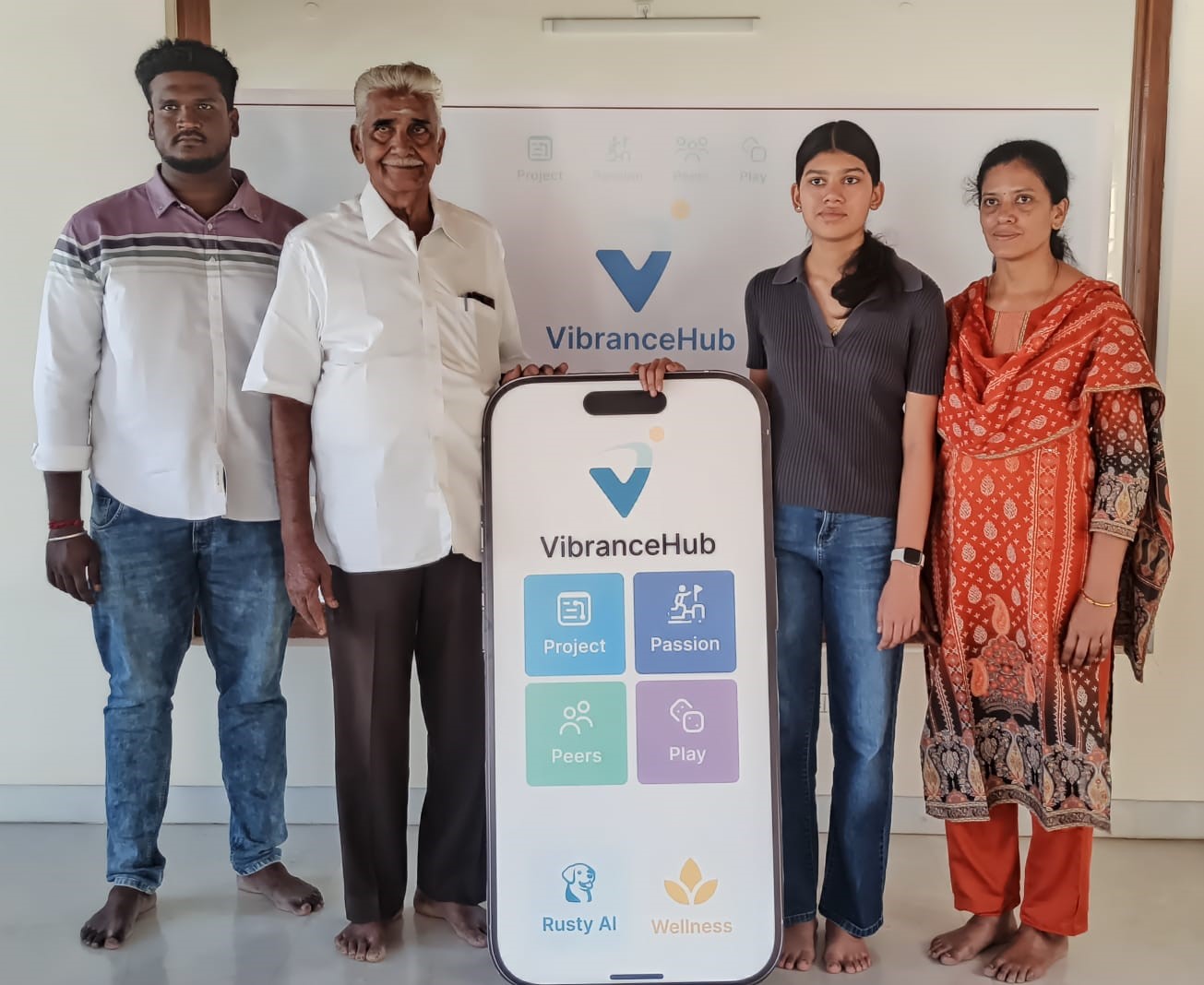

COIMBATORE — Rithanya Sivaram, a Class 12 student at The Indian Public School, has launched Vibrance Hub, a platform that promotes project-based learning, peer collaboration, and wellbeing support. This initiative addresses the critical gap as India prepares students for an AI-dominated future where creativity and sustained innovation are vital.
“In the age of AI, information is commoditized. What matters now is what you can make, how you think, and whether you can sustain creative work over time,” says Sivaram. This insight reflects the modern challenges facing education systems globally.
The Atal Tinkering Labs initiative has provided students with tools and space to innovate at a national level. However, Sivaram emphasizes that Vibrance Hub offers the necessary scaffolding and community support along with wellbeing practices to foster sustained interest in projects.
Vibrance Hub utilizes MIT’s Lifelong Kindergarten framework—comprised of Passion, Projects, Peers, and Play. This framework underlines the importance of maker education, which transcends mere construction. It focuses on instilling computational thinking, resilience through iteration, and collaboration, which are skills that artificial intelligence cannot replicate.
The initiative stands as a testament to India’s educational roots. Before the British imposed a rote-learning system in the 19th century, India’s gurukul tradition emphasized active learning through doing. Students engaged in hands-on experiences by forging metals or practicing medicine instead of passively consuming lessons.
The National Education Policy 2020 echoes this return to a maker-centric approach. It highlights that India’s future depends on cultivating creators and innovators rather than mere information repeaters. This philosophy aligns with the ethos of Vibrance Hub.
The Atal Innovation Mission (AIM), launched by NITI Aayog in 2016, represents India’s most ambitious effort to operationalize this maker-centric philosophy. By creating tangible infrastructures for hands-on learning, AIM addresses the NEP 2020’s clarion call for fostering creativity and innovation throughout the country.
Rithanya Sivaram’s vision is not just about creating a platform; it’s about instilling a mindset. Vibrance Hub encourages students to dive into their interests deeply and engage with their peers. This collaborative environment aims to challenge current educational paradigms.
Experts agree that fostering a culture of innovation and creativity in education responds meaningfully to the demands of the future workforce. “As workplaces evolve, educational methodologies must keep pace,” states Dr. Aditi Sharma, an educational consultant. “Initiatives like Vibrance Hub enable students to develop the necessary skills to thrive in an increasingly complex world.”
Vibrance Hub also integrates wellbeing practices, recognizing the importance of mental health in sustained creativity. Healthier minds contribute to innovative thinking, making it a holistic approach to modern education. The fusion of learning and wellbeing signifies a balanced development that the youth of today need.
This project represents a significant step towards transforming education in India, showcasing a model that prioritizes creativity, collaboration, and mental wellness. As students like Rithanya take the initiative, they inspire a broader movement towards a future where learning equips young minds not just with information, but with the ability to innovate and adapt in a rapidly changing world.