


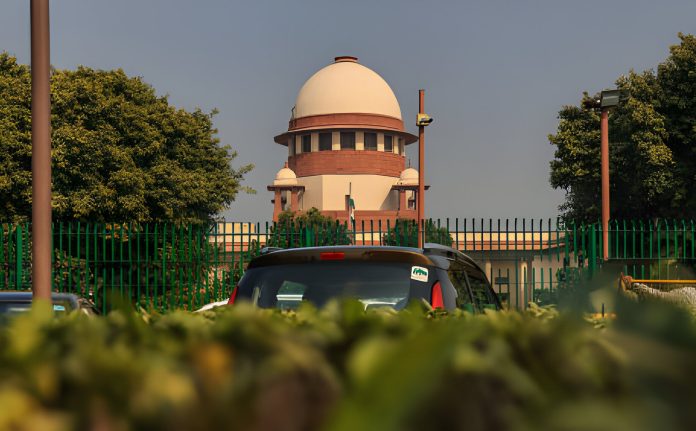

The Supreme Court of India has taken a significant decision by referring the question of whether litigants can directly approach high courts for anticipatory bail to a three-judge bench. This pivotal development underlines the court’s commitment to clarity in legal procedures related to bail.
On Wednesday, justices Vikram Nath and Sandeep Mehta indicated the matter’s importance, affirming that a larger bench should address the procedural implications. They stated, “This matter requires to be heard by a three-judge bench,” emphasizing the need for comprehensive judicial review.
Earlier, the Supreme Court designated senior advocate Siddharth Luthra as amicus curiae. His role is to provide expert guidance on the implications of litigants seeking anticipatory bail directly from the higher courts.
Concerns over the practices in different states prompted this review. On September 8, the Supreme Court expressed particular concern regarding the Kerala High Court, which has routinely accepted anticipatory bail applications directly from litigants. This judicial trend diverges from practices observed in other states, sparking a crucial legal discussion.
The court inquired, “One issue that is bothering us is that in the Kerala High Court, anticipatory bail applications are regularly entertained directly. Why is that so?” Such questioning spotlighted the potential inconsistency in procedural norms across Indian high courts.
Legal provisions in both the old Code of Criminal Procedure and the newly introduced Bharatiya Nagarik Suraksha Sanhita (BNSS), 2023, establish a clear hierarchy for bail applications. For instance, Section 482 of the BNSS specifically addresses guidelines for granting bail to individuals who fear arrest.
As observed by the Justices, “It doesn’t happen in any other state. Only in the Kerala High Court… applications for anticipatory bail are regularly entertained directly.” This statement raises questions about judicial equity and consistency throughout India’s legal framework.
The Supreme Court’s scrutiny intensified as it reviewed a petition from two individuals who contested a Kerala High Court ruling that denied them anticipatory bail. Alarmingly, these petitioners had approached the high court without first seeking relief from the appropriate sessions court.
In this context, the Supreme Court highlighted a pressing concern—such practices may hamper courts from developing thorough and factual records typically submitted to the sessions court. The court raised an important legal question, stating, “We are inclined to consider whether the option to approach the high court is a matter of choice for the accused or whether it should be mandatory to first go to the sessions court.”
In a proactive response, the court issued a notice to the Kerala High Court, demanding its response to this matter through its Registrar General. This judicial inquiry could potentially reshape anticipatory bail applications across states, ensuring uniformity in judicial practice.
Ultimately, the Supreme Court aims to clarify the legal routes available to litigants seeking anticipatory bail. This move illustrates a growing recognition of the need for procedural consistency in the handling of bail applications across the nation.