


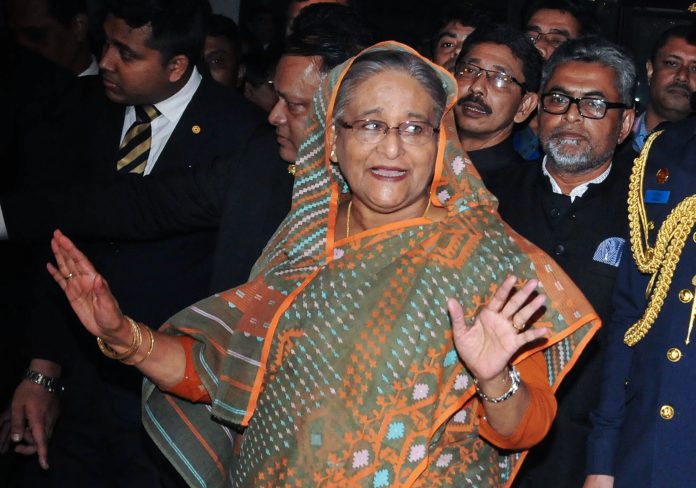

Ousted former prime minister of Bangladesh, Sheikh Hasina, has declared she will only return to her homeland after the restoration of “participatory democracy”. She cited the lifting of the ban on the Awami League and the holding of free and fair elections as critical conditions for her return.
In an exclusive email interview with PTI from an undisclosed location in India, Hasina criticized the unelected administration led by Dr. Muhammad Yunus. She claimed that this interim government threatens crucial ties with India and empowers extremist factions.
Gratitude towards India remains strong. Hasina expressed her appreciation, saying, “I am immensely grateful to India’s government and its people for their kind hospitality.” Her safety in India led her to state she will not return until certain political prerequisites are met.
Emphasizing her commitment to Bangladesh, Hasina noted, “The most important condition for my return is the same condition that the Bangladeshi people require: a return to participatory democracy.” She underscored the necessity of allowing the Awami League to partake in future elections.
Bangladesh’s longest-serving leader, Hasina left her country on August 5, 2024, in the wake of violent protests that forced her resignation. In her remarks, she acknowledged, “Obviously, we lost control of the situation, and that was regrettable,” attributing unrest to “seasoned political firebrands masquerading as student leaders.”
While reflecting on her departure, Hasina firmly rejected allegations of calling for a boycott of the upcoming polls in February. She insisted, “Any election excluding the Awami League would lack legitimacy.”
She pointed out the significant public support for her party, claiming, “Tens of millions of people support us… It would be a huge missed opportunity for a country that badly needs a government with genuine consent of the people.”
Hasina’s strong criticism of the Yunus administration extended to accusations of fostering anti-India sentiment, which she claims undermines Bangladesh’s strategic ties with its neighbor. “Yunus’ hostility to India is foolish and self-defeating. He is unelected, chaotic, and dependent on extremist forces,” she expressed, cautioning that Yunus’ errors could adversely affect bilateral relations.
She took the opportunity to reassure Indian citizens concerned about recent developments, stating, “The interim government doesn’t represent what our people think. India is and will remain our nation’s most important friend.”
In a bold move, Hasina indicated her willingness to stand trial under international supervision, including at the International Criminal Court (ICC). She accused Yunus of evading such scrutiny, believing that “an impartial tribunal would acquit me.”
Hasina dismissed proceedings against her in the Bangladesh International Crimes Tribunal as politically motivated, calling it a “kangaroo tribunal” designed to neutralize her and her party. She opined, “They want to eliminate us as political forces. The fact that they would use the death penalty to silence opponents shows how little respect they have for democracy or due process.”
She noted that Yunus had initially enjoyed support from Western liberal circles, but this support diminishes as they observe his administration appointing radicals and discriminating against minorities.
Moving forward, Hasina remains steadfast in her vision for a democratic Bangladesh and recognizes the fragile state of current governance. Her insights into the political climate reflect both local concerns and broader regional implications, particularly regarding India’s involvement in Bangladesh’s future.