


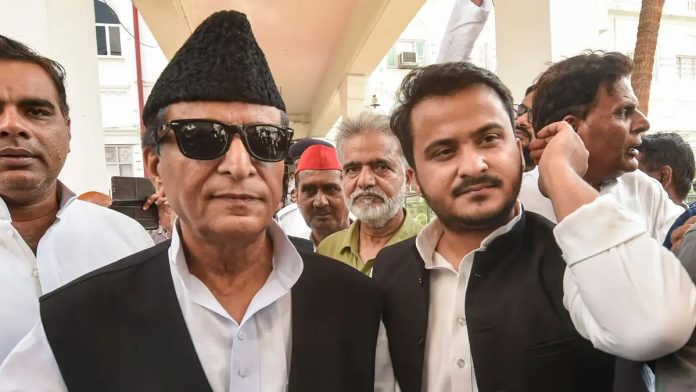

Senior Samajwadi Party leader Mohammad Azam Khan and his son Abdullah Azam faced severe consequences on Monday after a special MP/MLA court in Rampur convicted them in a significant forgery case from 2019. The court sentenced both to prison terms of up to seven years for procuring two PAN cards with fraudulent dates of birth, a prosecution officer revealed.
Special Magistrate Shobhit Bansal delivered the verdict after reviewing extensive documentary evidence and witness statements provided during the trial. This ruling marks a crucial development in a case that has attracted significant public interest, particularly given the political stature of Azam Khan.
Prosecution Officer Rakesh Kumar Maurya informed reporters that the prosecution intends to thoroughly examine the judgment. Depending on their assessment, they might pursue an appeal if the sentence appears inadequate. This possibility of appeal underscores the ongoing legal battles Khan and his son may face in the aftermath of this verdict.
Upon questioning about the immediate repercussions of the conviction, Maurya confirmed that Azam Khan and Abdullah would indeed be taken into custody following their conviction. This development marks a pivotal moment in the political landscape of Uttar Pradesh.
The case dates back to 2019 when it was registered at Rampur’s Civil Lines police station, prompted by a complaint from BJP leader Akash Saxena. The charges against both individuals fall under several sections of the Indian Penal Code, including IPC sections 420 (cheating), 467 (forgery of valuable security), 468 (forgery for cheating), 471 (using a forged document), and 120-B (criminal conspiracy).
According to the prosecution, Abdullah illegally obtained a PAN card from the Income Tax Department with a date of birth identified as January 1, 1993. This date aligned with his educational records and banking details, suggesting a calculated attempt to misrepresent his identity.
The court concluded that Abdullah forged the PAN card in conjunction with his father, Azam, and used it for various official purposes. This conviction highlights the serious implications of identity verification in political and legal contexts, raising questions about accountability among the political elite.
This ruling marks a significant moment in Uttar Pradesh’s political narrative, particularly as it involves a prominent figure like Azam Khan, who has previously faced numerous legal challenges. The ramifications of this case could influence political dynamics in the region, and both Khan and his son must now navigate the complexities of their legal situation from behind bars.