


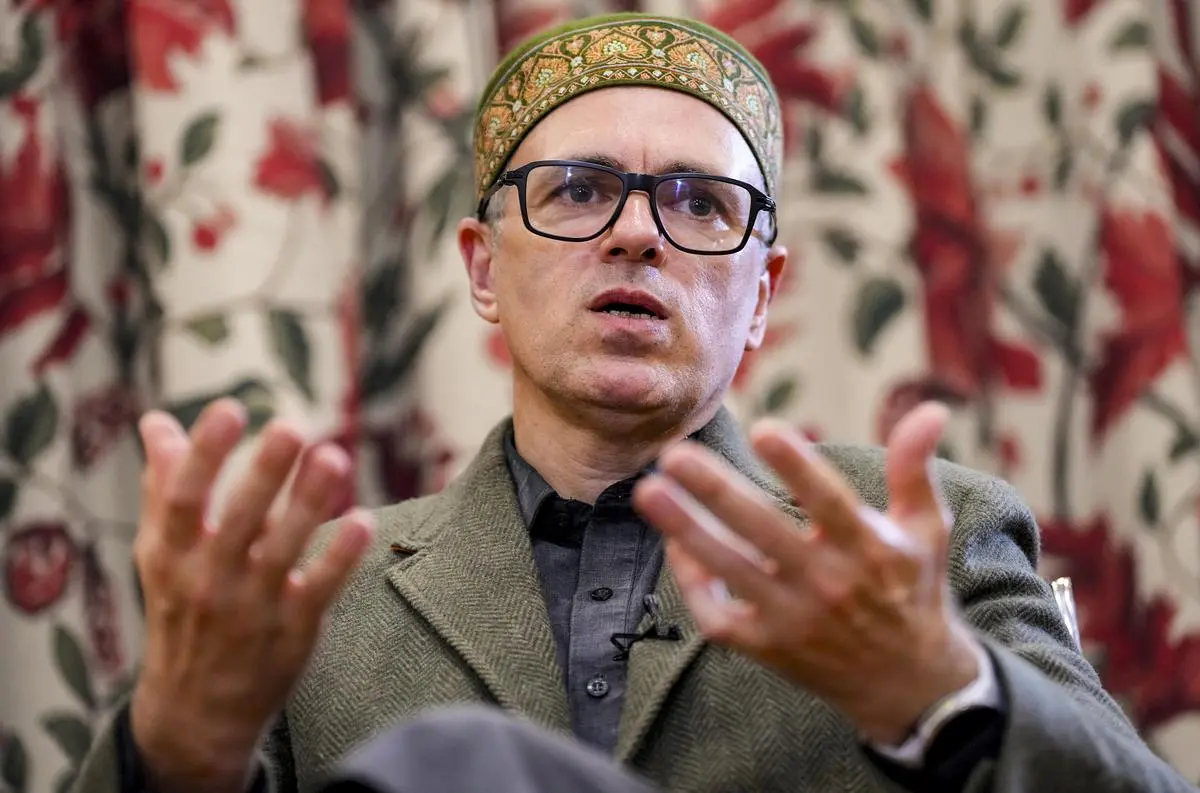

Jammu and Kashmir Chief Minister Omar Abdullah expressed strong support for Tamilaga Vettri Kazhagam (TVK) leader Vijay on Friday, arguing he should be given a fair chance to prove his majority in the Tamil Nadu Assembly.
Abdullah’s call comes on the heels of Tamil Nadu Governor Rajendra Vishwanath Arlekar’s rejection of Vijay’s claim to form the government. The governor contended that TVK lacks the necessary numbers to govern.
The TVK has not achieved a simple majority required for power in Tamil Nadu. Though the Congress party has offered its five MLAs in support, Vijay still falls short of the 118 seats needed in the 234-member assembly.
“The justification for imposing President’s rule in Tamil Nadu lacks merit,” Abdullah stated, referencing multiple Supreme Court judgments that favor inviting the single largest party to form a government. He insisted that television comparisons to historical cases further illustrate the precedent.
“After elections, the single largest party should be invited to prove their majority in the assembly,” Abdullah noted, highlighting the importance of allowing the democratic process to unfold.
He recounted the instance of former Prime Minister A.B. Vajpayee, who led a government for 13 days but ultimately resigned upon failing to secure majority support. “This historical example shows that the President’s office did not preemptively block the process,” he argued.
Abdullah firmly believes that allowing Vijay to form a government and demonstrably prove his majority is crucial for maintaining democratic integrity in Tamil Nadu. “If he can show majority support, then he may continue. If not, he will have to resign,” Abdullah asserted.
The political landscape in Tamil Nadu continues to evolve rapidly, and Abdullah’s statements reflect a larger debate about governance and the responsibilities of leaders. By advocating for Vijay, Abdullah emphasizes the significance of representation and support in the state assembly.
As the situation unfolds, political analysts and citizens alike will watch closely to see how this debate impacts the future of governance in Tamil Nadu.