


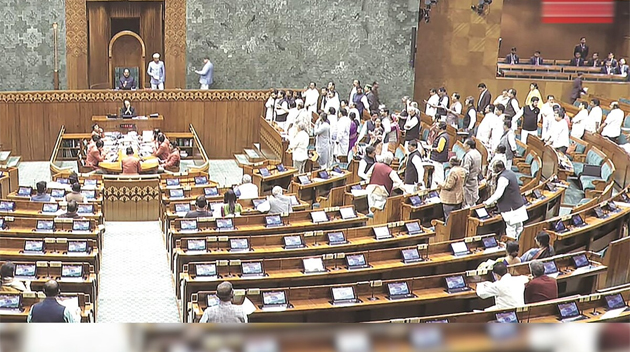

The Congress party is likely to stay away from the joint parliamentary committee (JPC) tasked with examining three contentious bills related to the removal of top government functionaries arrested for 30 consecutive days on serious charges. Party sources revealed this development on Monday, stating that the decision will soon be formally conveyed to Lok Sabha Speaker Om Birla.
Joining Congress in this boycott are at least three other opposition parties: Trinamool Congress, Shiv Sena (UBT), and Aam Aadmi Party, who have already declared their non-participation in the committee. The Samajwadi Party has also indicated support for a united opposition movement against the JPC. While some parties have yet to clarify their stance, none have expressed a willingness to join the committee, signaling a growing rift in parliamentary dynamics.
Earlier this month, Lok Sabha Speaker Om Birla stated that no political party had communicated their intention to boycott the JPC in writing. He told reporters,
“On the issue of JPC, no political party has communicated to me in writing on this subject.”
The backdrop to this controversy involves three significant bills introduced by Home Minister Amit Shah on the last day of the Monsoon Session, which are:
- The Government of Union Territories (Amendment) Bill
- The Constitution (One Hundred and Thirtieth Amendment) Bill
- The Jammu and Kashmir Reorganisation (Amendment) Bill
These proposed legislations aim to establish conditions under which the Prime Minister, Chief Ministers, and other ministers could be removed from office if arrested for 30 consecutive days on serious charges. As expected, these bills have sparked fierce protests from opposition groups, who label them as unconstitutional and politically motivated efforts to target opposition leaders across various states.
The Lok Sabha has referred these bills to a joint committee for rigorous scrutiny. The committee is meant to consist of 21 members from the Lok Sabha and 10 from the Rajya Sabha, but as of now, the committee remains unconstituted.
As this boycott unfolds, it raises significant questions about the implications for democracy in India. Political analysts note that such actions reflect the ongoing tensions between the ruling party and the opposition, particularly regarding accountability and governance. The forthcoming sessions will be crucial as the opposition rallies to challenge the government’s narrative surrounding these bills.
As the situation develops, the Congress party’s definitive stance on the JPC could reshape parliamentary proceedings ahead. Engaging in a boycott could serve to amplify the party’s objections to the legislation, while simultaneously raising concerns about the legislative process and the implications of these bills for accountability in governance.
Political observers will closely monitor the upcoming responses from the ruling party, as well as the eventual formation of the parliamentary committee. The absence of key opposition voices could significantly alter the discourse and impact how laws are shaped moving forward in the Indian legislative landscape.